tejas-mk-1a

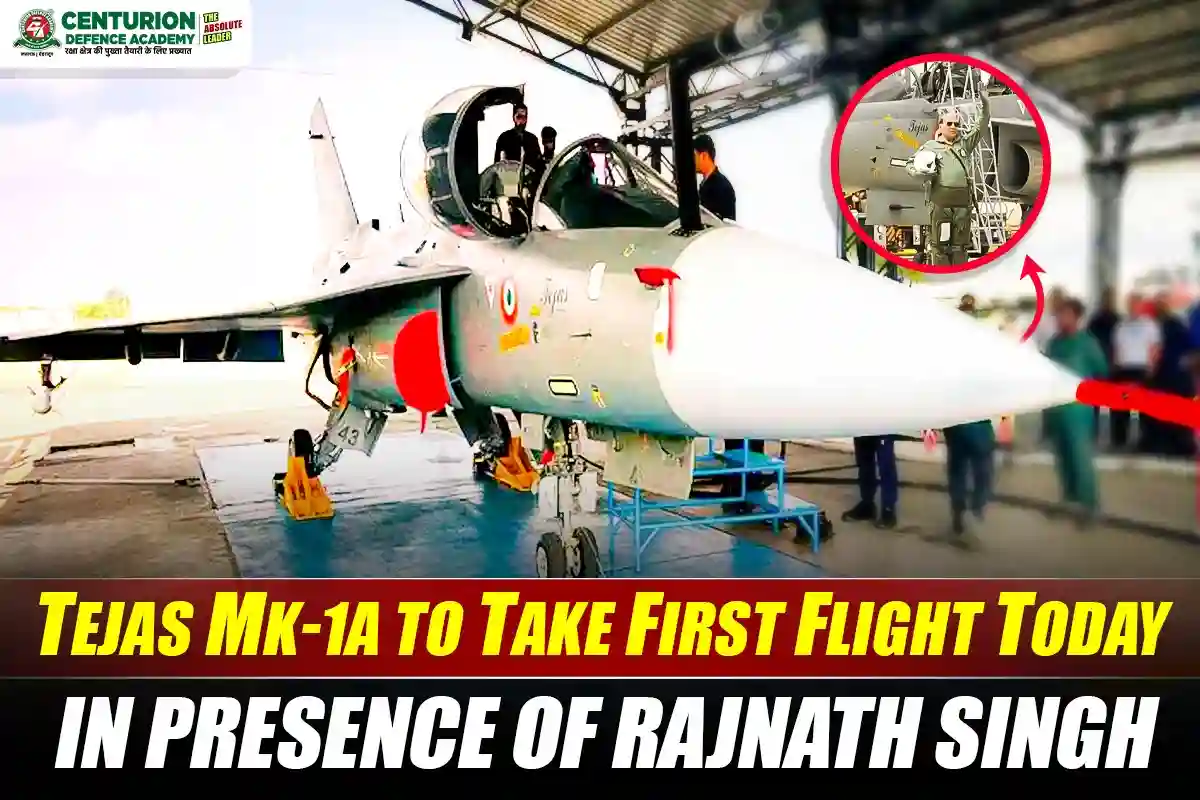
Tejas Mk-1A to Take Maiden Flight Today in Presence of Defence Minister Rajnath Singh

Nashik / New Delhi, October 17, 2025. In a landmark moment for India’s indigenous aviation program, the first Tejas Mk-1A aircraft rolled out from HAL’s Nashik facility is scheduled to make its maiden flight today.

The occasion will be witnessed by Defence Minister Rajnath Singh, who is also set to inaugurate the third Tejas production line at Nashik.

A Milestone for HAL’s Nashik Facility

The Nashik unit is HAL’s third production line dedicated to the Tejas series, complementing two existing lines in Bengaluru. The Nashik line is projected to add the capacity to manufacture eight aircraft per year, thereby raising the combined Tejas output to 24 aircraft annually.

The Defence Minister will also witness the launch of HAL’s second production line for the indigenous HTT-40 trainer aircraft at the same facility, part of HAL’s overall expansion in Nashik.

Tejas Mk-1A: Upgrades and Challenges

Mk-1A is a derivative of the Light Combat Aircraft (LCA) Tejas with more than 40 improvements over its Mk-1 version. Important improvements are:

  • AESA radar and cutting-edge avionics (like the Uttam radar)
  • An Electronic Warfare (EW) suite and self-protection systems
  • Air-to-air refuelling capability 
  • Expanded weapon compatibility, including long-range missiles such as Astra and ASRAAM

Despite these strides, the programme has faced delays, most notably due to delays in the supply of GE F404-IN20 engines from the United States. HAL and the Ministry of Defence have cited these supply chain constraints as a primary bottleneck in timely delivery.

In recent months, HAL has stated that it aims to deliver 12 Mk-1A jets by the end of 2025–26, provided engine supplies stabilise.

What to Expect Today & What Lies Ahead

Today’s sortie is scheduled to be a brief trial flight, verifying the airframe and equipment before the next series of trials, which include electronic warfare, weapon firing, and expansion of flight envelopes, among others.

Once these trials are completed and certification is attained, HAL will commence deliveries of the aircraft to the Indian Air Force (IAF). Authorities clarified that the IAF will not be handed over for delivery immediately after today’s flight.

Meanwhile, the IAF is eagerly awaiting the advanced fighter. As Air Chief Marshal A. P. Singh reportedly remarked: “We are eagerly waiting for the LCA Mk-1A, it’s like we are waiting with hungry mouths for food.”

Strategic Implications & Defence Autonomy

The successful flight of the Tejas Mk-1A from Nashik would mark a milestone in India’s push for self-reliance in defence manufacturing (Atmanirbhar Bharat). It also signals the ability to scale up indigenous fighter production outside Bengaluru and reduce overdependence on imported platforms.

Moreover, the deal for 97 Mk-1A aircraft (68 single-seaters and 29 twin-seaters), formalised in September 2025, will inject momentum into the Tejas programme.

In parallel, the MoD recently inked a massive ₹62,370 crore (~USD 7 billion) contract with HAL to scale deliveries under this upgraded variant.

In his public remarks at other forums, Defence Minister Rajnath Singh has highlighted that India’s next leap would be in 5th-generation fighters and domestically developed engines, aiming to push the envelope of indigenous capability.

Challenges to Watch

  • Engine Supply Security: The flow of GE F404 engines remains a critical dependency. Any further disruption could bottleneck the program.
  • Certification & Trials: Weapon trials, EW trials, and airworthiness certification still lie ahead.
  • Production Ramp-up: Meeting the target of 24 aircraft per year will require robust supply chains, quality control, and possibly private sector participation.
  • Delivery Schedule: Ensuring that the IAF receives these jets on time remains a central metric of success.

Read also:

Leave Comment

loader
Centurion Brochure PDF