difference-between-tat-wat-srt

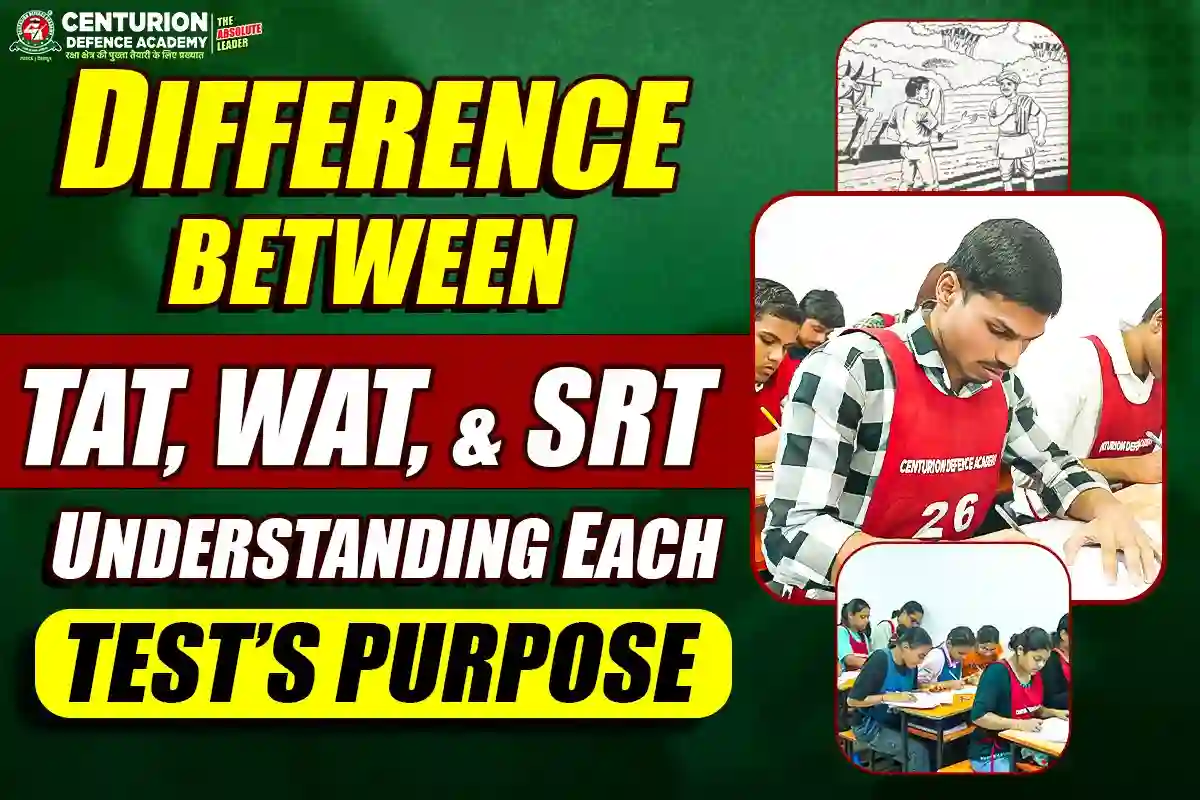
Difference Between TAT, WAT, and SRT – Understanding Each Test’s Purpose

The SSB (Services Selection Board) interview is considered one of the most detailed and scientific selection systems in India. Instead of just testing knowledge, it analyses who you are as a person. Your values, attitude, reactions, decision-making ability, leadership sense, confidence level, and emotional balance are all evaluated.

A major part of the SSB assessment includes Psychological Tests, which are conducted by expert psychologists to evaluate your natural personality. These tests include:

In this article, we’ll focus on the first three TAT, WAT, and SRT and understand:

  • What each test is
  • What its purpose is
  • What qualities are checked
  • How do they differ from each other
  • How to perform better in each

If you are preparing for SSB, this article will help you understand the psychological tests in the simplest possible manner.

Why Psychological Tests are Conducted in SSB

The Indian Armed Forces want officers who are reliable, responsible, mentally tough, and capable of thinking calmly even under pressure. These qualities can’t be measured by a simple written exam.

Psychological tests help assess:

  • How you think
  • What you value in life
  • How do we observe situations
  • How you react under pressure
  • Whether you fit the OLQs (Officer-Like Qualities)

The best part is:

You cannot “mug up” these tests. Your natural personality automatically comes out.

This is why genuine preparation, not memorised lines, helps you perform better.

1. What is TAT (Thematic Apperception Test)?

How TAT Works

In the TAT, a candidate is shown 12 pictures one after another. For each image:

  • You get 30 seconds to observe, and
  • 4 minutes to write a story

The last picture is completely blank, where you must create your own story.

TAT does not test your English writing skills or literary style. Instead, it shows:

  • How you perceive a situation
  • How do you solve problems
  • How you approach challenges
  • How much responsibility do you take
  • Whether you think positively or negatively

What Assessors Look For

A TAT story should ideally show:

  • Realistic and logical situations
  • A positive and responsible approach
  • Clear outcome
  • Stable mindset
  • Leadership or initiative

Let’s understand with a simple example:

tat-story

A student is looking at books and a calendar showing exam dates.

Weak story: Ravi felt nervous and confused about his exam.

Better story: Ravi calculated the days left, made a study plan, focused on weak topics, and secured good marks in the exam.

Both stories use the same picture, but one shows helplessness, and the other reflects planning, resilience, and action qualities that the Armed Forces look for.

Purpose of TAT

TAT helps assess:

  • Decision-making
  • Confidence
  • Problem-solving
  • Emotional stability
  • Proactiveness
  • Sense of responsibility

Through your stories, psychologists observe how you approach life.

2. What is WAT (Word Association Test)?

How WAT Works

In WAT, you are shown 60 words, each for 15 seconds, and you need to write the first thought that naturally comes to your mind.

You don’t get much time to think. That’s the whole point: the test captures your natural attitude and belief system.

What WAT Judges

WAT reflects:

  • Your mindset
  • Emotional maturity
  • Social values
  • Optimism
  • Discipline
  • How do you see life in general

Your response should show clarity and positivity without sounding forced or artificial.

Examples

If the word is:

“Failure”

Weak response: Failure is disappointing.

Better response: Failure improves effort and leads to success.

Short, positive, and realistic.

Common Mistakes Students Make

Some candidates try to “force” heroic sentences, which makes them look unnatural.

For example: 

Word: Fight

Rohan fought terrorists and saved the entire city.

This sounds cinematic, not realistic.

A better response would be: One must fight challenges with confidence.

Simple, natural, believable.

Purpose of WAT

WAT reflects:

  • Your core personality
  • How do you think every day
  • Your emotional control
  • Your approach to difficulties

It is one of the most direct windows into your thought process.

3. What is SRT (Situation Reaction Test)?

How SRT Works

In SRT, you are given 60 real-life situations and about 30 minutes to write your reactions. The situations are based on common life scenarios involving:

  • Responsibility
  • Pressure
  • Time scarcity
  • Social issues
  • Moral decisions
  • Problem-solving

Your reactions should be:

  • Practical
  • Quick
  • Action-oriented
  • Realistic

Example

Situation: He is going for an interview, and his bike gets punctured on the way.

Weak reaction: He panics and waits for help.

Better reaction: He secures the bike and hires alternative transport immediately.

This shows responsibility, decision-making, and a practical attitude.

Purpose of SRT

SRT checks:

  • How you behave under pressure
  • Your presence of mind
  • Your leadership instinct
  • Whether you react logically
  • How realistic are your decisions?

The answers show what you will actually do in real life, not just what you think.

Key Differences Between TAT, WAT, and SRT

Aspect

TAT

WAT

SRT

Nature of Test

Story writing

Spontaneous sentence formation

Reaction to real-life situations

Total Questions

12 pictures

60 words

60 situations

Time Limit

4 minutes per picture

15 seconds per word

30 minutes total

Focus

Perception & thought process

process

Belief system & mindset

Decision-making under pressure

What It Reveals

How you think

What you think

How you react

Qualities Checked

Planning, responsibility, leadership

Optimism, emotional maturity

Quick judgment, practicality

Together, these tests show a complete psychological picture of the candidate.

How These Tests Work Together

Many aspirants worry:

“What if my TAT story shows something different and my WAT sentence shows something else?”

Don’t worry. If you are truthful and natural, your personality will remain consistent across tests.

Mismatch happens only when:

  • Candidates try to act fake
  • Responses are unrealistic
  • Stories are dramatic and not practical

Psychologists compare all responses:

  • TAT stories
  • WAT sentences
  • SRT reactions
  • Self Description

If everything points in the same direction, your personality is clear and stable.

How to Perform Better in TAT, WAT, and SRT

Here are some practical tips:

1. Be Natural

SSB can easily detect forced or memorised answers. Show your real personality.

2. Show Action

In TAT and SRT, assessors look for “what you did,” not just “what you felt.”

3. Think Like an Officer

An officer:

  • Takes initiative
  • Supports the team
  • Acts responsibly
  • Remains calm
  • Finds solutions

Reflect this mindset in your responses.

4. Practice to Improve Speed and Clarity

You don’t need flowery language; clarity and logic are enough.

5. Stay Positive

Even in stressful situations, show maturity, confidence, and emotional balance.

Why Training Matters – The Role of Centurion Defence Academy

While the psychological tests evaluate your natural personality, most candidates:

  • Don’t understand how these tests work
  • Write vague or incomplete responses
  • Panic under time pressure
  • Fail to express their thoughts properly
  • Lack of exposure to professional evaluation

This is where a structured and scientific SSB preparation approach helps.

Centurion Defence Academy, with branches in Lucknow and Dehradun, is one of India’s leading SSB training institutes known for:

  • Highly experienced ex-SSB officers
  • Complete psychological training (TAT, WAT, SRT & SD)
  • Daily practice under real-time conditions
  • Individual feedback by psychologists
  • Live SSB-like environment
  • Personalised performance improvement plans

Centurion does not just “teach answers”; it helps:

  • Develop the right thought process
  • Build officer-like qualities naturally
  • Overcome mindset barriers
  • Improve communication and expression
  • Increase confidence in real-life problem-solving

Thousands of students who trained under Centurion Defence Academy’s 21-Day SSB Program have cleared SSB and joined the Armed Forces.

Whether you are preparing for:

  • NDA
  • CDS
  • AFCAT
  • TES
  • ACC
  • MNS
  • Other entry routes

Centurion offers:

  • Classroom training
  • Interview guidance
  • GTO sessions
  • Psychological assessment
  • Study material
  • 24×7 mentorship

Their balanced approach ensures that aspirants not only learn what to write but also understand how to think like an officer, which is the real key to clearing SSB.

Leave Comment

loader
Centurion Brochure PDF