How to Write Effective Stories in TAT (Thematic Apperception Test) – Tips & Examples
If you’re preparing for SSB, you know TAT matters. You get 30 seconds to see a picture and 4 minutes to write a story. Many candidates panic or write unrealistic tales.
But TAT isn’t about fancy English or drama. It tests how you think and whether you show leadership, responsibility, and problem-solving skills.
Training helps. Places like Centurion Defence Academy offer guidance from ex-SSB officers who teach you to think clearly and write focused stories through daily practice.
This article covers what TAT is, the right mindset, how to write strong stories, common mistakes, examples, and how coaching improves your performance.
What Is TAT in the SSB?
TAT is a projective psychological test where you are shown:
- 11 pictures + 1 blank slide
- Each image stays for 30 seconds
- You then write a story in 4 minutes
Your story must explain:
- What led to the situation
- What is happening in the present
- What will be the outcome
Psychologists are not interested in fancy language or poetic expression. They are reading the story to understand:
- How do you assess a situation
- Whether you show leadership qualities
- How proactive and practical you are
- Do you focus on solutions or just the problem
- Whether you stay positive under pressure
In simple words:
TAT is not about what you see; it is about what you make happen.
What Makes a Strong TAT Story?
A good TAT story is one that:
- Shows a positive approach
- Has a realistic, believable hero
- Shows clear initiative and action
- Ends in a logical and constructive outcome
- Highlights OLQs without directly mentioning them
Remember, the hero of the story is indirectly a reflection of you. The assessors are trying to understand how your mind works. That’s why training the mind is more important than memorising stories.
This is something that institutes like Centurion Defence Academy strongly focus on. Instead of providing memorised stories or templates, their psychology instructors help candidates understand “why the mind responds in a certain way” and “how to think like a future officer.”
A Simple 4-Step Method to Write Great TAT Stories
Many aspirants overthink the process, but you don’t need anything complicated. Use this simple four-step framework:
Step 1: Identify the Main Character
The hero should be:
- Relatable
- Practical
- Someone who fits naturally into the situation
If the scene shows a student, the hero doesn’t need to be a commando or superhero. Keep it real.
Step 2: Identify the Problem or Situation
Every picture reflects some underlying situation:
- Accident
- Social challenge
- Leadership need
- Goal or mission
- Crisis or urgency
- Emotional or community concern
Your job is to quickly identify the situation.
Step 3: Show Action
This is where most candidates fall short. They write stories that are full of emotion but lack action. TAT stories should reflect:
- Decisions
- Planning
- Execution
- Teamwork
- Practical steps
This is where your OLQs shine naturally.
Step 4: Give a Positive, Concrete Outcome
A weak ending looks like:
“Everything was solved and everyone was happy.”
A strong ending looks like:
- A project completed
- People helped
- A plan executed
- A measurable improvement
A good story should show that your actions led to a meaningful change.
How to Show OLQs Without Writing Them Directly
Never write:
“He displayed leadership and courage.”
Instead, show it through actions like:
- Taking initiative
- Organising people
- Planning work
- Helping others
- Solving a crisis calmly
- Completing a task efficiently
In TAT, the assessors value demonstration more than description.
A Ready-to-Use TAT Story Structure
If you struggle with time, follow this format:
- Background (1–2 lines)
- Present Situation (2–3 lines)
- Action Taken (4–6 lines)
- Outcome (1–2 lines)
With regular practice, this becomes automatic. Students trained at Centurion Defence Academy get regular timed writing sessions to develop this habit.
Common Mistakes Most Candidates Make in TAT
Let’s look at errors you must avoid:
Filmy or unrealistic stories
Beating 20 terrorists single-handedly is not practical.
Dark, sad, or negative themes
The SSB wants problem-solvers, not pessimists.
Too much emotion, not enough action
Feeling sad is not a story; doing something about it is.
Memorised stories
Assessors can immediately sense artificial writing.
Over-explaining scenes
The picture already shows the situation; focus on what your hero does.
Professional guidance helps avoid these mistakes early. This is one reason many candidates trust Centurion Defence Academy, where continuous evaluation and immediate feedback help fine-tune the writing in just days.
Sample TAT Stories
Below are some examples to understand strong writing.
Example 1 – Scene: Collapsed House
Rohit, a civil engineering student, visited his village when a part of an old house collapsed after heavy rainfall. Realising many houses were weak, he met the village council and proposed a low-cost reconstruction plan using stronger local materials. He prepared layouts, formed a team of volunteers, and helped the families apply for government grants. Within two months, 27 houses were repaired before the monsoon, ensuring the villagers lived safely.
Why this works:
- Realistic
- Hero takes initiative
- Clear action and measurable results
Example 2 – Scene: Student at Notice Board
Aditi, a Class 12 student, noticed that classmates were confused about career choices after school. She suggested conducting monthly career awareness sessions where alumni and working professionals could guide students. She organised schedules, posters, and invitations. Over the next three months, more than 600 students benefited, and many gained clarity about their future opportunities.
Shows:
- Planning
- Communication
- Social initiative
Example 3 – Scene: Road Accident
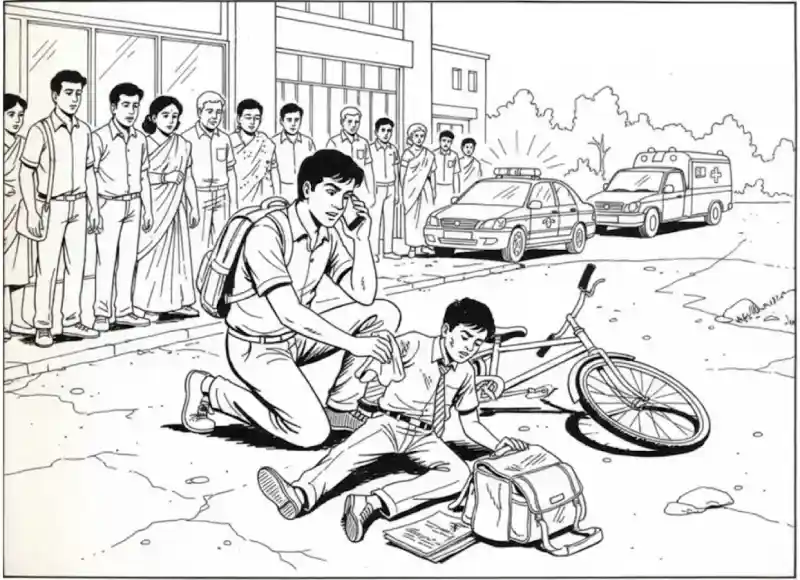
Vikram was returning home when he saw a boy lying injured on the road. He checked for responsiveness, provided basic first aid, called an ambulance, and informed the family using details found in the school bag. He stayed with him until hospital admission and later filed a report with the police. Doctors confirmed that timely help prevented serious complications.
Shows:
- Presence of mind
- Calm under pressure
- Responsibility
Example 4 – Blank Slide
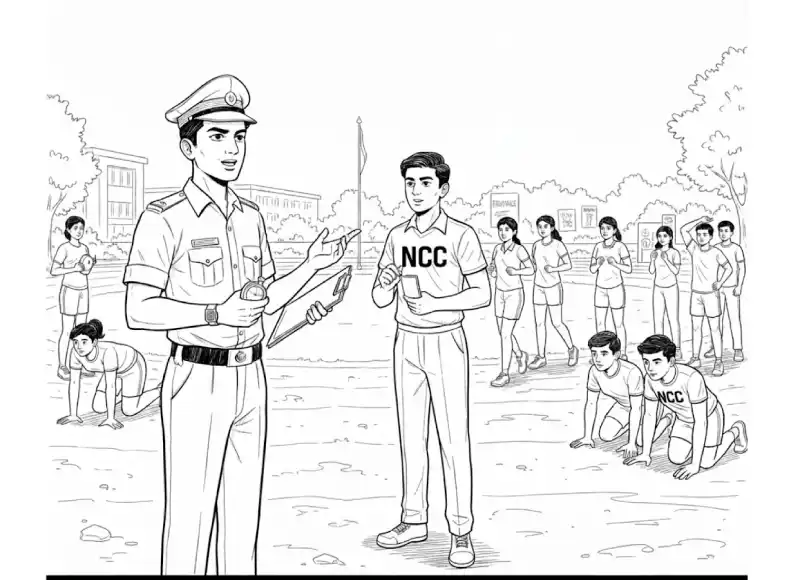
Rohan, an NCC cadet, was chosen to lead his college team for an inter-state trekking event. Recognising that some members lacked physical readiness, he designed a 15-day training routine that included hiking, cardio, stretching, and endurance drills. He monitored progress and ensured hydration and nutrition. The team completed the trek successfully and ranked second overall.
Shows:
- Leadership
- Planning
- Team efficiency
How Coaching Helps Build the Right Mindset
Many candidates write stories but never get proper feedback. Without guidance, it’s hard to understand:
- What message is your story projecting
- What kind of mindset does the psychologist interpret
- What qualities are missing
- How to think faster and more positively
This is where structured training from Centurion Defence Academy makes a noticeable difference. Aspirants receive:
- Daily psychology practice
- Regular TAT, WAT, SRT and interview sessions
- One-on-one assessment by trained ex-SSB officers
- Corrections and personality development feedback
- Classes on thought process, perception, leadership and communication
- Complete SSB preparation (Psychology + GTO + Interview)
With this approach, candidates don’t just learn to write stories; they learn to think like officers, which is exactly what the SSB wants.
How to Improve Your TAT Performance Starting Today
Here are simple ways to get better:
- Read and observe real situations
- Practice writing within the 4-minute limit
- Think solutions, not problems
- Focus on clarity and structure
- Seek expert evaluation
- Train your mind to stay positive
As SSB trainers often say:
“SSB does not want perfect language. It wants a practical and mature mind.”
Bringing It All Together
At the end of the day, TAT is not just a writing test; it is a thinking test. To do well:
- Keep your hero realistic
- Show initiative and responsibility
- Provide logical and positive outcomes
- Make your character someone who acts, not someone who just reacts
With the right mindset and guidance, TAT becomes easier and even enjoyable. And if you want professional, structured, and successful training, Centurion Defence Academy is one of the best destinations for complete SSB coaching, with proven selections, expert assessors, and a training approach that focuses on developing the mind, not just the story.
If you want, I can also provide:
- A downloadable practice set of 12 TAT pictures
- More sample stories
- A practice sheet with time-based drills
Recent Posts
-
AFCAT 2 2026 Admit…
August 6, 2026
-
IAF Agniveervayu Non-Combatant Recruitment…
August 3, 2026
-
AFCAT 2 2026 Exam…
July 31, 2026
-
SRNTH 3.0 India’s Biggest…
July 30, 2026
-
MNS 2026 Registration Extended!…
July 30, 2026


Leave Comment