What After NDA 1 2026 Written Exam

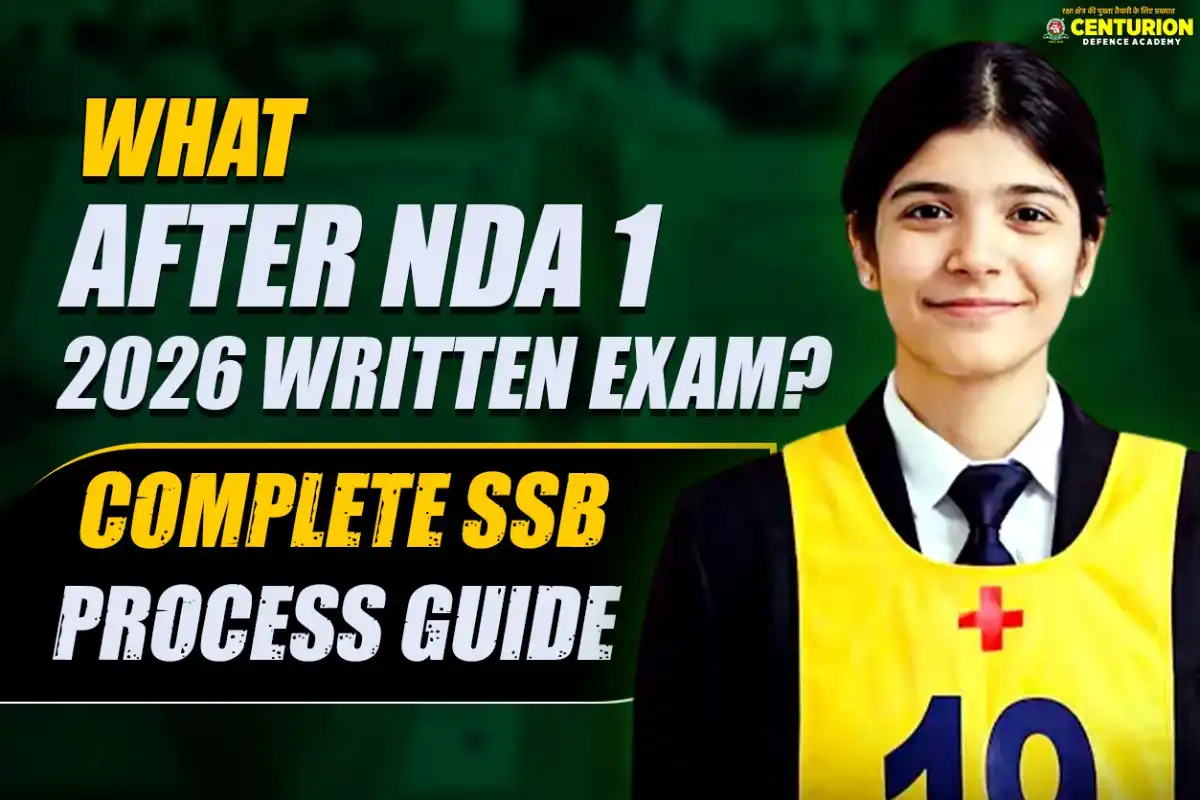
What After NDA 1 2026 Written Exam? Complete SSB Process Guide

If you have just appeared for the NDA 1 2026 written examination, you have already taken the first big step toward making your dream come true. However, it is essential to know that the written test is just a beginning, not the end.

The actual journey begins after this stage, with the SSB Interview (Services Selection Board).

Many students feel confused after the NDA written exam:

  • “What happens next?”
  • “How will SSB be conducted?”
  • “Do I need coaching immediately?”
  • “Is SSB difficult?”

1. After NDA Written Exam – What Actually Happens?

Once you appear for the NDA written exam conducted by UPSC, the evaluation process begins. After a few weeks (or months), UPSC releases the written result in PDF format.

If you qualify for the written exam:

You will receive:

  • A call letter for the SSB Interview
  • Reporting instructions
  • SSB centre details
  • Required document list

If you do not qualify:

You will need to prepare again for the next NDA attempt.

Important point:

Clearing the NDA written exam only means:

“You are eligible for SSB Interview”

It does not mean final selection.

2. What is an SSB Interview? (Understand It Properly)

SSB stands for Services Selection Board, and it is the most important stage of NDA selection.

Unlike written exams, SSB does not test:

  • Memorisation
  • Formula-based answers
  • Coaching notes

Instead, it tests:

  • Your personality
  • Your thinking process
  • Your leadership qualities
  • Your behaviour in real-life situations

In simple words:

SSB checks whether you have Officer-Like Qualities (OLQs) or not.

There are 15 OLQs, such as:

  • Leadership ability
  • Decision making
  • Confidence
  • Responsibility
  • Team spirit
  • Mental toughness

3. SSB Duration and Structure

SSB is a 5-day-long process, and it is divided into different stages.

Common SSB centres:

  • Prayagraj (Allahabad)
  • Bhopal
  • Bengaluru
  • Kapurthala
  • Visakhapatnam

You will stay in the SSB centre for 5 days along with other candidates.

Now, let’s understand each day in detail.

4. Day 1 – Screening Test (Most Crucial Stage)

Day 1 is the elimination round, and it filters out a large number of candidates.

Screening consists of:

(a) OIR Test (Officer Intelligence Rating Test)

This is a basic reasoning test, including:

  • Series
  • Coding-decoding
  • Analogies
  • Pattern recognition

It is not very tough, but speed and accuracy matter.

(b) PPDT (Picture Perception and Discussion Test)

You are shown a blurred image for 30 seconds. Then you need to:

  1. Observe the picture carefully
  2. Write a story (based on characters and situation)
  3. Discuss it in a group

What assessors check here:

  • Your observation skills
  • Your imagination
  • Your communication in the group discussion
  • Your attitude towards teamwork

Reality:

Around 60–80% candidates get eliminated on Day 1 itself.

So this stage is extremely important.

5. Day 2 – Psychological Testing (Inner Personality Check)

This is where SSB starts digging deeper into your mind.

You cannot prepare “fixed answers” for this stage. Everything is spontaneous.

Tests included:

(a) TAT – Thematic Apperception Test

You are shown pictures and asked to write stories.

They want to see:

  • How you think
  • How do you solve problems
  • Whether you show leadership in your stories

(b) WAT – Word Association Test

You are shown words one by one and must write sentences quickly.

Example:

Word: “Courage”

You might write: “Courage helps soldiers face difficult situations calmly.”

(c) SRT – Situation Reaction Test

You are given real-life situations like:

  • A friend is injured
  • You are stuck in a crisis
  • Team conflict situation

You must write how you will react.

(d) Self Description Test

You write about:

  • What your parents think of you
  • What your teachers think
  • Your strengths and weaknesses
  • Your goals

Key idea:

They are not checking “perfect answers” but your natural personality.

6. Days 3 & 4 – GTO Tasks (Group Testing Officer Stage)

This is the most interactive and exciting part of SSB.

Here, you are tested in group situations.

Major GTO Tasks:

1. Group Discussion (GD)

You discuss social or current topics with your group.

2. Group Planning Exercise (GPE)

A situation is given, and the group must find a solution.

3. Progressive Group Task (PGT)

You cross physical obstacles as a team using supporting materials.

4. Half Group Task (HGT)

Similar to PGT but with fewer candidates.

5. Lecturette

You speak on a topic for 3 minutes in front of a group.

6. Command Task

You have been made a leader and must guide your group.

7. Final Group Task (FGT)

Final obstacle task with full group participation.

What GTO is actually checking:

  • Leadership qualities
  • Team spirit
  • Communication
  • Confidence
  • Decision-making under pressure

Important truth:

You don’t need to dominate the group. You need to contribute meaningfully.

7. Personal Interview (PI Round)

The interview can happen on any day between Day 2 and Day 4.

This is a one-on-one interaction with an Interviewing Officer.

Common questions include:

  • Tell me about yourself
  • Your schooling and achievements
  • Your daily routine
  • Your hobbies
  • Why do you want to join NDA?
  • Current affairs questions
  • Situational questions

What they really observe:

  • Honesty in answers
  • Confidence level
  • Clarity of thought
  • Communication style

Important advice:

Never try to fake answers. Officers are trained to detect fake personalities very quickly.

8. Day 5 – Conference Day (Final Decision)

On the final day, all assessors sit together and evaluate your complete performance.

You are called for a short interaction called a conference round.

After that, the final results are declared:

  • Recommended
  • Not recommended

Important point:

The result depends on:

  • Screening performance
  • Psychology tests
  • GTO tasks
  • Interview performance

It is a combined evaluation, not a single test result.

9. Medical Examination (After SSB Recommendation)

If you are recommended, you move to the medical test stage.

Medical checks include:

  • Height and weight
  • Eye vision test
  • Hearing test
  • Blood and urine tests
  • Chest X-ray
  • Overall physical fitness

Important:

Medical standards are strict. Even small issues can matter, so maintaining good health is very important.

10. Final Merit List (Last Step)

After SSB and medical clearance, UPSC prepares the final merit list.

Selection depends on:

  • Written exam marks
  • SSB performance
  • Number of vacancies

If your name appears in the list, you get admission into:

NDA (National Defence Academy), Khadakwasla

11. Common Mistakes Students Make After the Written Exam

Many students lose their chances after clearing the written exam due to avoidable mistakes:

Overthinking SSB

SSB is not scary; it is a personality check.

Mugging up answers

Fake answers are easily detected.

Ignoring communication practice

Communication is key in every SSB stage.

Not practising group discussion

GD is a major elimination factor.

Thinking coaching is everything

Coaching helps, but personality development matters more.

12. How to Prepare After NDA Written Exam

Here is a practical approach:

Improve communication daily

Speak in English or Hindi confidently.

Read newspapers regularly

Current affairs help in GD and interviews.

Practice psychology tests

Try TAT, WAT, and SRT at home.

Develop group interaction

Discuss topics with friends regularly.

Work on confidence

Stay natural and avoid overacting.

13. Right Mindset for SSB Success

After clearing the NDA written exam, many aspirants struggle with SSB because it is very different from academic exams.

This is where structured guidance becomes helpful.

Centurion Defence Academy provides focused SSB training designed to develop real Officer-Like Qualities rather than memorised answers.

Their SSB preparation includes:

  • Psychological test practice (TAT, WAT, SRT, SDT)
  • GTO task training (GD, PGT, Command Task, Lecturette)
  • Personal Interview preparation with feedback
  • Regular group discussions and personality sessions
  • Mentorship from experienced defence trainers

They also offer:

  • A 21-day comprehensive SSB course in Lucknow and a 14-day SSB Course in Dehradun 
  • A 14-day fast-track program for quick revision
  • Preparation from home through the Centurion Digital App for remote learners

With centres in Lucknow and Dehradun, the academy focuses on building confidence, clarity of thought, and leadership behaviour step by step.

14. Right Mindset for SSB Success

SSB is not about becoming someone else.

It is about showing:

  • Who you really are
  • How do you think under pressure
  • How you behave in a group

Golden truth:

“SSB does not select the best student; it selects the best personality.”

Conclusion

Once the 2026 Written Test of NDA 1 Exam is over, things begin to become more practical and relevant. This time, the SSB Interview will not be a mere test to qualify. Rather, it will be a personality assessment that will help you develop as a person and learn about yourself and the qualities needed to be an officer.

Instead of getting scared of SSB, try to understand how it works, take it step by step, and prepare naturally. Stay confident in your own abilities.

Ultimately, NDA selection will involve much more than clearing some exams. It is a process of evolving into a good officer.

Frequently Asked Questions

A lecturette is a speaking task in which candidates are given a topic and asked to speak for about three minutes in front of a group. It evaluates confidence, clarity of thought, communication skills, and the ability to structure ideas within a limited time.

Yes, current affairs play an important role in SSB, especially in group discussions, lecturette, and personal interviews. Reading newspapers daily helps candidates stay updated and express informed opinions during discussions.

Screened-in candidates are those who successfully clear the screening test on Day 1 and continue to the full five-day SSB process. Screened-out candidates are those who fail to clear the screening stage and are sent back after Day 1.

In some cases, if a candidate is temporarily unfit, they may be given time for medical correction or re-evaluation. However, permanent medical issues may affect the final selection as the armed forces have strict medical standards.

The final selection is based on a combined evaluation of written exam marks, SSB performance, medical fitness, and the number of available vacancies. Only candidates who clear all stages successfully are included in the final merit list and admitted to NDA.

Comments (1)

  • Priyam May 4, 2026

    Result kab aayega bahut tension ho rahi hai

    Reply

Leave Comment

loader
Centurion Brochure PDF